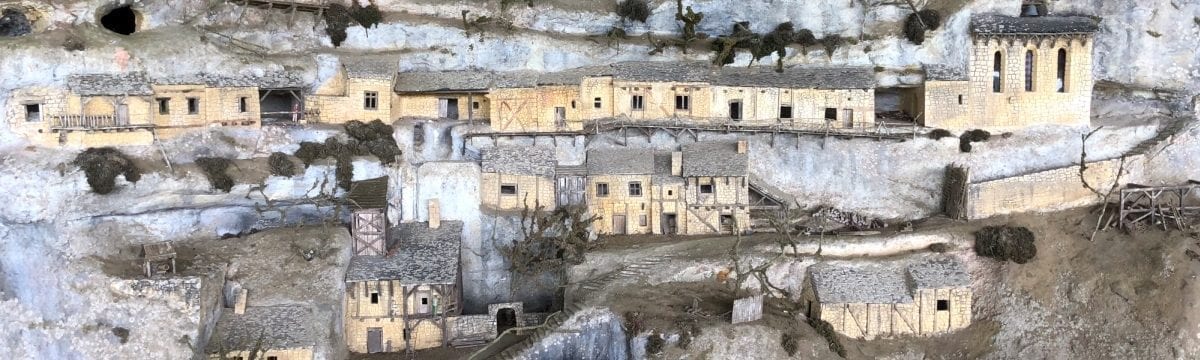
The Dordogne region of France is full of interesting attractions, not least from a historical perspective. One of the best examples is the troglodyte settlement at La Roque St Christophe, near the village of Peyzac-le-Moustier. Situated on a cliff that overlooks a bend in the River Vezere the ‘cave town’ has been used as a shelter since before pre-history. Archaeologists have found artefacts dating from Neanderthal man (50000 BC) and Cro-Magnon man (25000 BC). There is evidence that the caves were still in use right up until the Renaissance era, historical records showing that occupation came to an end in 1588 during the Wars of Religion.
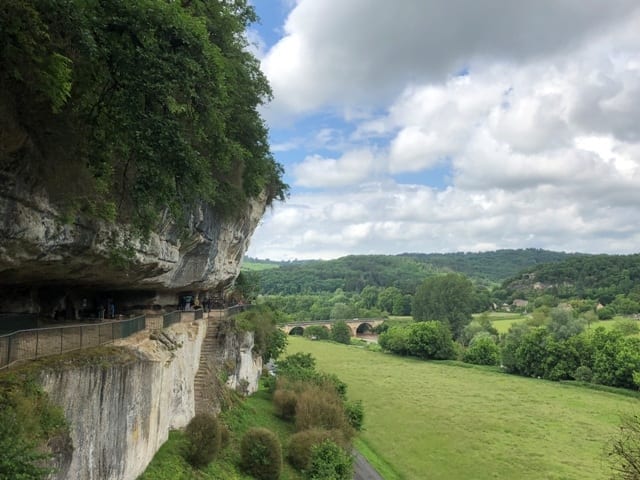
We visted La Roque St Christophe during a recent camping trip to the Dordogne.
The Troglodyte Town
La Roque St Christophe was credited UNESCO World Heritage Site status in 1979.
The community actually occupied five terraces in the cliff face in this area stretching for about ½ a mile. The terraces then led to shallow naturally hollowed out caves in the limestone cliff that provided shelter. Situated some three hundred feet above the ground the Roque Saint Christophe community was a fantastic development in cooperative living. It is thought that at one time the village might have been home to around 1,000 people.
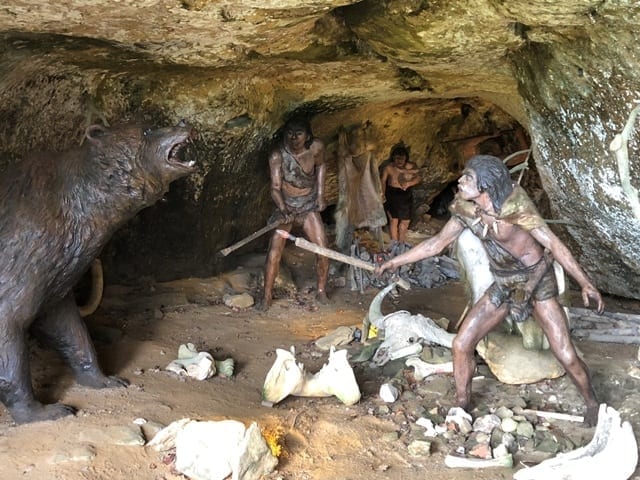
There is no denying the perfect positioning of the village. It is high up near the river to provide fish, water and transport and next to a fertile plain and also a forest. The occupants were able to fish, hunt and grow crops all within a couple of hundred yards of their shelter.
Exploring La Roque Saint Christophe
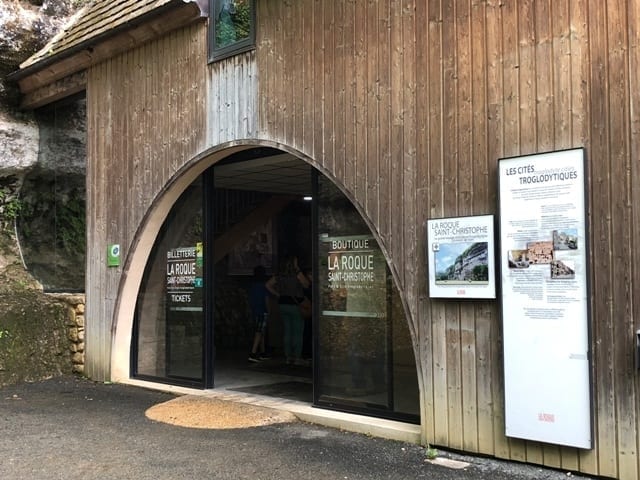
The complex is definitely worth a visit. Only by exploring can you get a feel for its size and importance. We parked in the river valley carpark and walked up the steps to the Visitor’s Centre. This way up is the original entry to the fortress, which was the solitary entrance into the town and part of the town’s defences. The entrance is narrow with a look out post from which rocks, hot oil or arrows could be propelled at invaders.
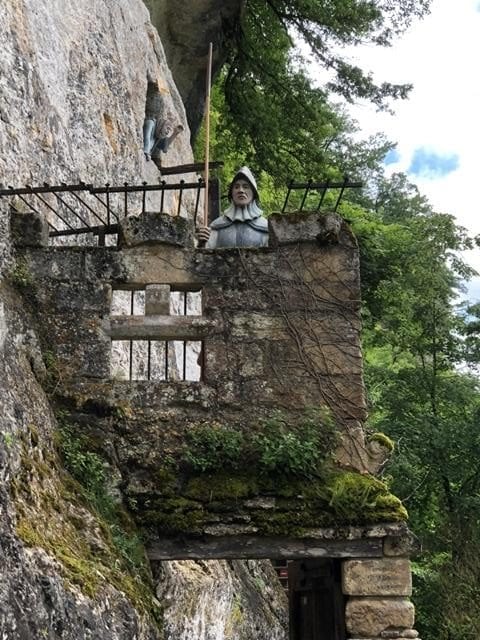
There was also a strong door and a drawbridge to further prevent attack.
After passing through the visitor’s centre you can see how the caves were used as the base for buildings in the town.
Holes were hewn into the rock to support beams and then construct ceilings and roofs. Houses were built in the traditional medieval half-timbered style with roofs covered in flat stones called lauze. Aside from the dwellings the cave walls have evidence of different areas such as the cowshed, the slaughterhouse and next to it the smokehouse for preserving the meat.
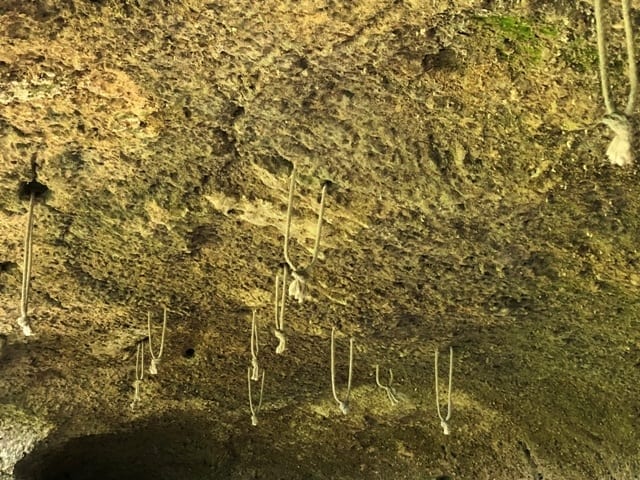
Ceiling ties for hanging meat
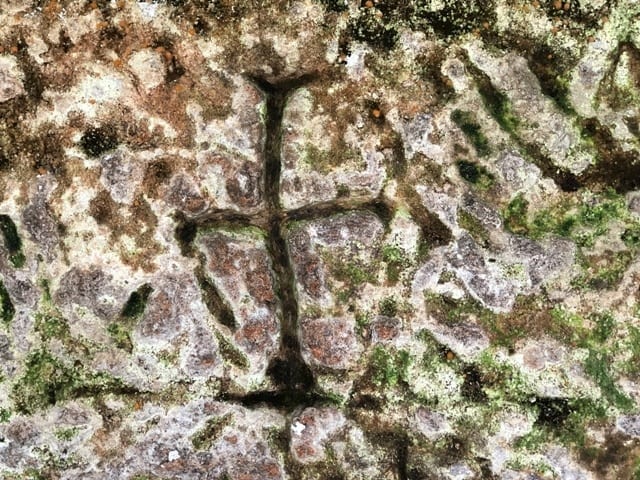
There is also the church, the forge, and the carpenters workshop. The church is identified by crosses carved into the rock.
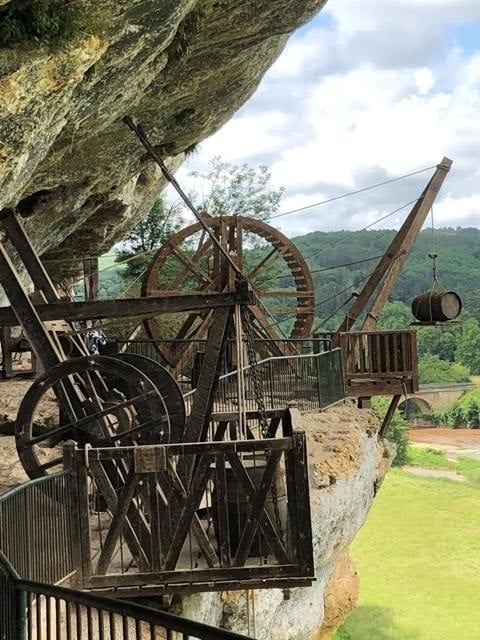
Further along replicas of winches, scaffolding and cranes that would have been used in medieval times to build the town.
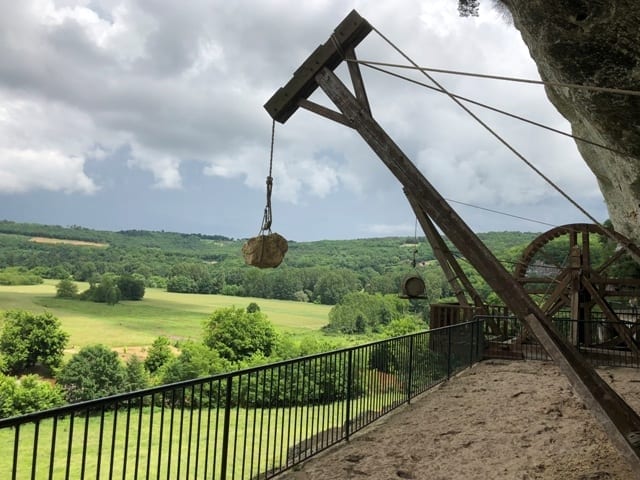
The Highlights
The complex has five terraces and you can visit all of them to gain the full experience. There are several areas that must not be missed. Over the main part of the town there is a 275-metre-long overhang, which is the largest natural shelter in Europe. Another is the ‘great staircase’, cut from the surrounding limestone to form one of the largest monolithic staircases in Europe.
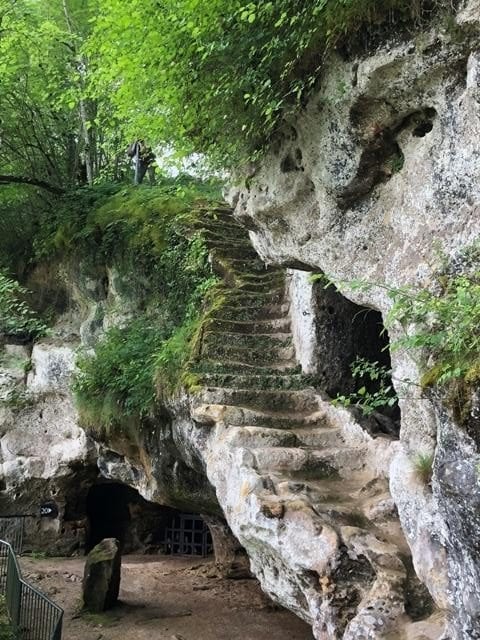
The staircase leads to the highest terrace from where the town was defended by throwing stones and shooting arrows.
Visiting
You can visit all year round, but the opening hours vary according to the seasons. January, November and December: 10.00-17.00; February, March and October: 10.00-18.00; April, May, June and September: 10.00-18.30; July and August: 10.00-20.00.
The cost is around €8.50 per adult and €4.50 for children (5-13yrs). The visit is pet friendly, and we took our dogs along (on leads of course).

We visited when Eurocamping in nearby Le Bugue.



Such an interesting place to visit!! My parents have a house in the region (near Martel) and I love exploring nearby – I will have to put this place on the list!! Charlie xo
http://www.thebarefootangel.com