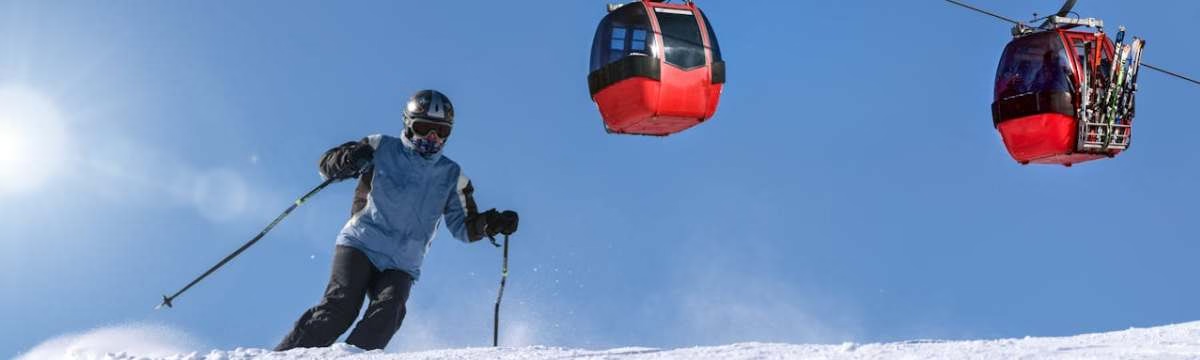
Learning to ski as a complete beginner can feel like signing up for a sport invented purely to humiliate the uninitiated. Boots that don’t bend, legs that apparently belong to someone else, and slopes that looks suspiciously steeper once the skis are on. The reality is far less dramatic. With the right first steps and a little patience, the sport becomes surprisingly logical and ski holidays become genuinely addictive.
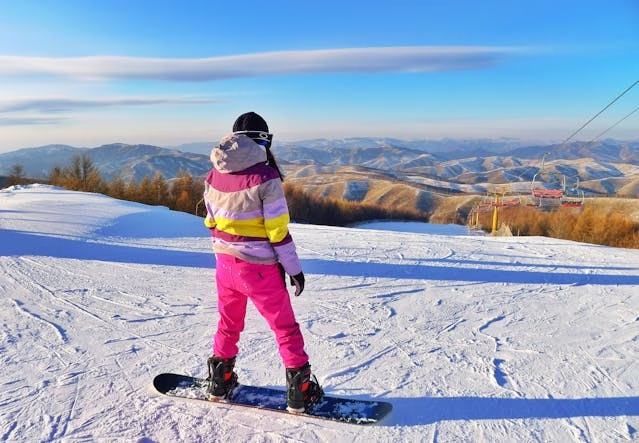
Start Small: Why UK Indoor and Dry Slopes Are Brilliant for First Timers
Before anyone books flights or starts arguing about chalets, you need to see whether you actually like the sport. You can do this by trying it close to home. UK indoor snow centres and dry slopes are ideal for beginners. They remove the biggest variables (weather, visibility, and the pressure of “making the most of the week”).
A couple of sessions on a local slope can confirm whether it is love, like, or a polite “no thanks” before committing to full-scale ski holidays with all the cost and logistics that come with them. Better still, early lessons at home mean that when you reach the mountains, you feel more prepared, and the first day is not spent learning how to stop.
Getting the Basics Right: Lessons, Gear, and What to Expect on Day One
Lessons are non-negotiable, at least at the start. A good ski instructor will teach stance, balance, turning, stopping, and how to use lifts without turning it into a contact sport. The best mindset for day one is to take it slow. The speed will come later.
Gear is simpler than beginners think. Pack warm, waterproof layers: salopettes, a proper ski jacket, base layers, gloves or mitts, and decent ski socks. The specialist kit (skis, boots, poles, helmet) is usually best rented at the slope or resort, where staff can fit boots properly and swap equipment if something feels wrong. Expect awkward moments, a few wobbles, and a lot of time spent practising basic turns. That is not failure, that is skiing.
Travel Trends to Know Before You Go: What’s New for 2026
A few trends are making skiing feel more accessible in 2026. Multi-family trips are on the rise as people want to spend more time with loved ones, plus it means shared childcare and costs, as well as moral support, which is needed when skiing!
Confidence-building courses are becoming a popular add-on for cautious adults who want coaching without the “why is everyone faster than me” panic. Sustainable travel is getting a real boost too, with more UK skiers opting for rail to get to the Alps. Eurostar’s Snow services, for example, have been positioned as a smoother, lower-stress alternative to flying for peak winter travel.
The Payoff: Small Steps to Big Fun
Skiing rewards preparation. Start locally, learn properly, choose a beginner-friendly resort, and travel in a way that keeps the trip enjoyable rather than exhausting. Even a modest first week can deliver that moment every skier remembers: when the turns start linking up, the fear drops away, and it finally feels like flying.


