
A couple of months ago I was walking the dogs in the dunes near Winterton-on-Sea in Norfolk and saw something in the grass. It turned out to be a 9mm cartridge case of WWII origin. I thought the area had probably been a training ground for soldiers. Later that day I visited ‘Poppylands’, a wartime themed café near Horsey and just a few miles from Winterton. I spotted a WWII sten gun on display at the café and was told it had belonged to the Winterton Home Guard who trained in the dunes there. So, I had found the cartridge case and the gun that had fired it!
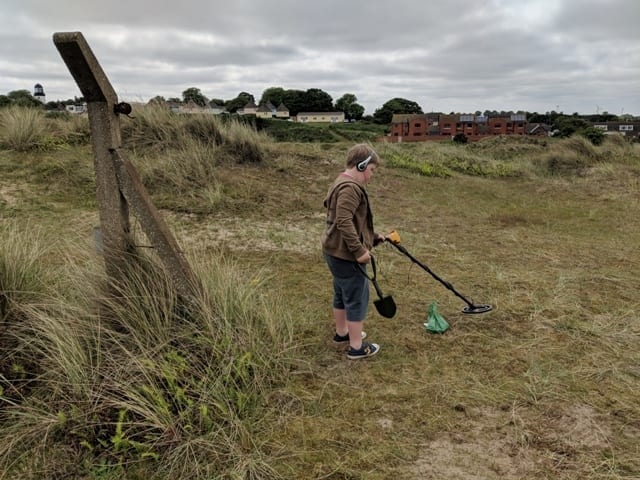
My interest (and Toby’s) was piqued and we thought about metal detecting to possibly find more interesting historical stuff. Searching in the same area so far has only produced some modern coins, rusty nails and bottle tops, but it is early days yet. Our next expedition will probably be the beach to try and get some coin and jewellery finds under our belt.
What do I need?
Well you need a good mid-range detector. You don’t have to spend a fortune. Take advice and buy what you can afford. A metal detector specialist such as Regton Ltd is a good place to start as they have the experience and can advise you really well. Essentially though, you need a detector, headphones, spare batteries, a small foldable spade or trowel and a strong bag for finds. Other nice ‘to haves’ might be a smaller hand-held pin-point metal detector to locate finds more accurately, and also a sieve for use on the beach.

Where can I go?
You can metal detect in most places, with permission. Research your areas and get permissions first. If you get objections then leave the area. In some instances, people can get funny and call the police. You must get permission to detect on private land (and possibly also the beach); but the beach is often a good place to start. There are rules and etiquette to abide by. These can be easily researched on the internet or your local metal detector dealer will provide the heads up.
What will I find?
You will find a lot of junk in the early days, as I did! These include ring pulls, nails, bits of wire, pill packets, bottle tops and foil. However, with practice you can bypass some of this and find more interesting stuff such as coins, jewellery, buckles and buttons. Make sure you fill your holes in after searching AND take the metal ‘junk’ home to be disposed of.

Metal Detecting
Garrett ACE™ 200i Metal Detector
The Garrett ACE 200i is a great first detector. It has a 16.5 x 23cm (6.5″ x 9″) PROformance submersible search coil. You can search underwater with this but it won’t work very well. The ACE 200i has three detection modes to discriminate junk from coins or jewellery. There are also three distinct tones for different conductivity metals i.e., it will sound different for iron, copper and silver/gold. There are also indicators for depth of the object, which is optimised for coins and a low battery indicator in case you are running out of power. Target ID legend and Mode/Discrimination patterns are also included in the readout to make reading the signals easier.

Where Next?
Well, we’re back in Norfolk this weekend. We plan to head back down the dunes, and on to the beach. The best time will be after a good storm or some high spring tides. However, it’s been lovely for the last few days – so we’ll see what we find. If you want to follow our metal detecting ‘progress’ keep a look out on our instagram page as we’ll post our finds there!


Are you allowed to detect in the dunes at Winterton or even on the beach. This is something I’ve just got interested in.
Who do you contact to get permission for Winterton.