
One of the attractions at the top of the historic Bastille in Grenoble is the Mountain Troops Museum. Opened in 1988 this is an interesting and informative tour about the history and modern-day activities of the Blue Devils. The museum was moved to the vaulted keep of the Bastille in 2009. The ‘Chasseurs Alpins’ are elite mountain troops in the French Army. They were first formed in 1888 as a response to the Italian Alpini troops. The Blue Devils are specially trained to operate in mountainous terrain and in urban warfare. They wear the traditional and very distinctive ‘tarte des Alpes’, a wide white beret with a golden daffodil emblem.
Getting to the Mountain Troops Museum
Getting to the museum couldn’t be more fun! It’s at the top of the Téléphérique de Grenoble Bastille (affectionally called ‘the bubbles’).
The Museum
The museum is staffed by members of the Chasseurs Alpins. They are glad to answer any questions, in French, and even pose for photographs.

The exhibits take you through the history of mountain soldiers from the beginning to the present-day. The history of these elite troops is told to visitors in the form of dioramas demonstrating the soldiers actions during service.
There are displays of medals, weapons and many examples of personal bravery. 3D hologram ‘films’ are used to relate the story of how the troops were formed, how they train, their bravery during both world wars and their modern deployment. These troops train to be superb cross-country skiers, expert mountain guides and climbers and experts in cold weather survival. Many blue devils are highly sought after for mountain climbing expeditions.

The Traditions
The Chasseurs are known as Les diables bleus (The Blue Devils) because of their fierce resistance to the Germans in WWI. They are known to fight to the last man and the last bullet.
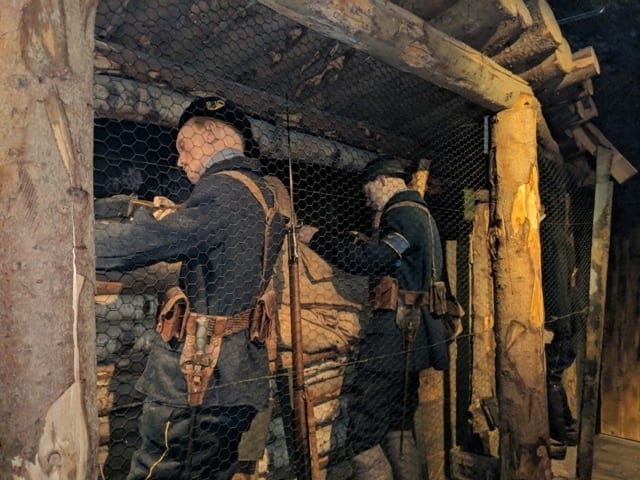
A single Blue Devil with a machine gun held up a troop of German soldiers in an Alpine pass. His superior knowledge of mountain warfare kept them pinned down.
The Chasseurs are not allowed to say the word Red (rouge); instead they use ‘le cerise bleu’ (cherry blue). Napoleon demanded the regiment wear red pantaloons! And they refused, so they don’t say rouge. All very colour conscious, they are also said to have green blood and this is from the words of an old regimental song.
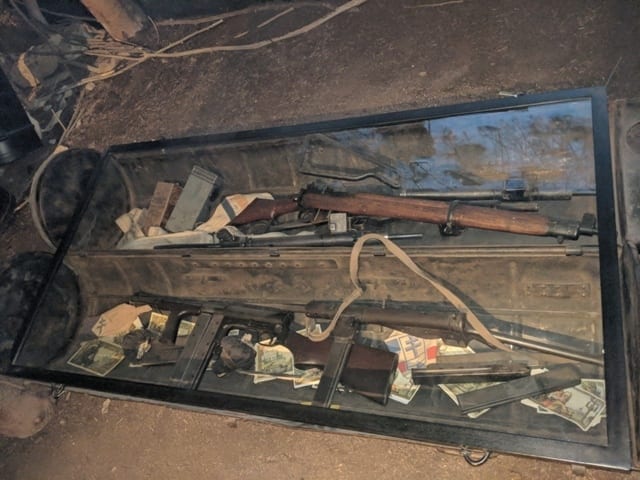
There is a huge amount of tradition. I love military history and I have to say the visit to the museum was one of the highlights of our trip to Grenoble.



Sounds like a great visit. My eldest would really enjoy this.
My son loved it – especially being able to pose with the soldiers!