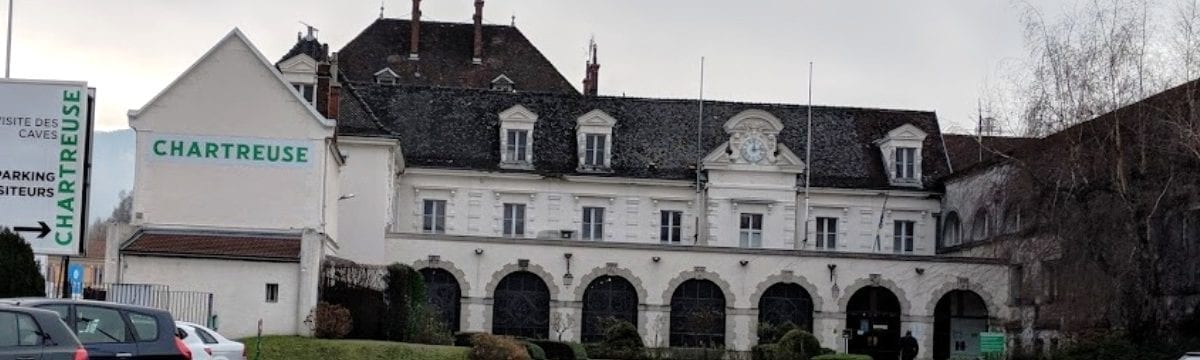
On our recent visit to south-east France we visited the Caves de Chartreuse in Voiron (about 15km from Grenoble) to see the longest liqueur cellars in the world. Chartreuse is a well-known French liqueur that has been made by the Carthusian Monks since 1737, to a secret recipe containing 130 herbs, plants and flowers. The liqueur is named after the Grande Chartreuse Monastery where it was first produced in the Chartreuse Mountains. The liqueur is now produced in the town of Voiron, but up until 1980 was also distilled and matured in Tarragona, Spain.
Origins of Alpine Liqueurs
In 1605 François Hannibal d’Estrées, who was a marshal of artillery to French King Henry IV, gave a recipe to the Carthusian monks at Vauvert. This was presented as an alchemical manuscript containing a recipe for an ‘elixir of long life. There are other versions in the Alps, such as Genepi (a home-made liqueur), and also the lesser known Stellina. Stellina is made in Belley, about 60km from the Chartreuse Caves and is similar in taste and colour. They are all elixirs of long life 🙂 Interestingly, some of the higher-proof Italian versions can be drunk but also be used on the skin externally.
Types of Chartreuse
There are two main types of Chartreuse. Green Chartreuse (110 proof or 55%) is made from plants macerated in alcohol and steeped for about 8 hours. The final maceration gives the liqueur its green colour. Yellow Chartreuse (80 proof or 40%), has a much milder and sweeter flavour and aroma. The liqueur has to mature in cask for between eight and ten years with regular sampling before bottling.

The casks are made of oak and are on average reused three times. Chartreuse is actually one of the few liqueurs that continues to age and improve in the bottle. The US market is the largest consumer.
Our Visit
We visited the ‘caves’ just before Christmas, and because we were the only visitors at that time, we had a personal tour of the longest liqueur maturing cellar in the world. There was a talk about the pot stills and how the alcohol is distilled and a display of some of the herbs used in the maceration and steeping process.

The liqueur contains a huge amount of sugar and some of the casks had pretty green sugar crystals growing out of gaps.

The tour (and tasting afterwards) was great. You get to try both yellow and green versions to compare. For corporate groups, a proper mixologist will produce a range of Chartreuse cocktails. The shop provides lots of liqueur purchasing options along with Chartreuse-branded items – the prices are very reasonable. If you visit, buy a small bottle of the green and yellow Chartreuse to try once you are back home. It is really nice.
What is it like?
Chartreuse has a strong characteristic taste. It is very sweet, but has a spicy and pungent aftertaste. The flavour is similar to Galliano or Strega, but a little more botanic. Its flavour is sensitive to temperature. It is popular in some cocktails, but only in small quantities.
Chartreuse is popular in French ski resorts to lace hot chocolate and make a drink called Green Chaud.
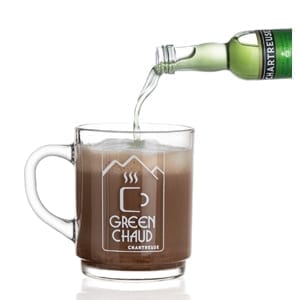
Perfect for Aprés Ski.