Iceland is on our must-see destinations list, not because we’ve never been, but rather that we didn’t stay long enough to see enough! Long before the children were born, we spent a long weekend in this beautifully quirky country. We hired a car and managed to visit the Blue Lagoon, the geysers and the Gulfoss Falls – the famous Golden Triangle tourist spots! We saw these highlights, and I now want to take the children to see everything else that Iceland has to offer. So, I asked my travel blogging friends to suggest a single thing that we must visit when we go. They’ve already been super brilliant in suggesting itineraries for Hawaii, Hong Kong, Cape Town, Bali, Sri Lanka, and Vancouver – can’t wait to see what’s included in this Armchair Travelling post 😊
Reykjavik
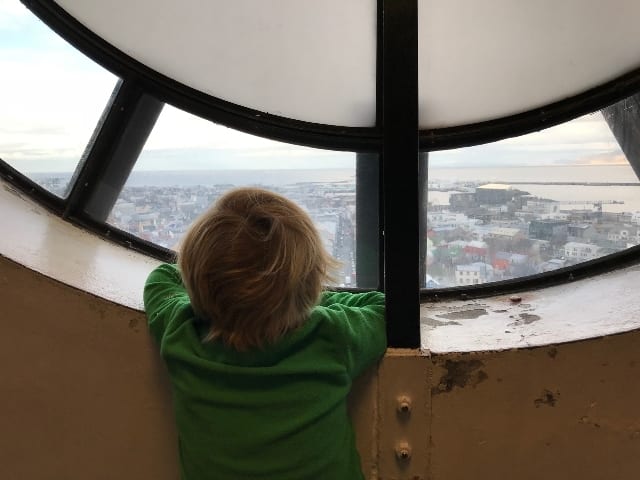
When visiting Iceland it’s inevitable that you’ll spend some time in the capital Reykjavik. This small city is a delight to discover filled with fun museums, cool street art, fun activities and more than enough ice cream stores to keep all kids happy.
Start your trip to Reykjavik with kids with a trip to the Hallgrímskirkja church. It’s the largest church in Iceland and the best place to get a bird’s eye view of the city. Once you’ve got your bearings, head to the Settlement Museum to discover some of the country’s history. Located below ground, the museum is built around the ruins of a Viking longhouse. There are some fun multimedia exhibitions and an activity area where kids can dress up as Vikings themselves. Other highlights include the excellent Maritime Museum and the Whale Museum.
You should also spend some time simply wandering Reykjavik’s streets. It’s an easy city to explore on foot; make sure you spend some time along the sea wall where the city’s concert hall, Harpa, is located. This is also where you’ll find the iconic Sun Voyager statue.
Don’t leave Reykjavik without trying a hot dog (if it’s good enough for Bill Clinton!) and some liquorice ice cream!
Submitted by Katja, Globetotting
Jokulsarlon Glacier Lagoon
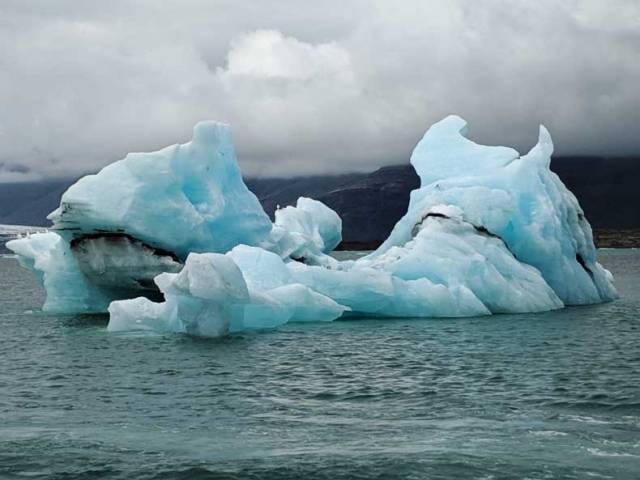
Taking a boat ride through a glacier lagoon is one of the most memorable things to do in Iceland. It isn’t every day that you can boat or kayak up to the side of a massive iceberg that just broke off of a glacier. But at Jokulsarlon Glacier Lagoon, you can do exactly that. Jokulsarlon Glacier Lagoon is known for its large icebergs floating around the water. It is the largest and deepest lake in Iceland and has quadrupled in size since 1970 as the glacier is melting at a rapid pace.
A tour of the lagoon is not only fun for families but it is an educational experience. If visiting Iceland with young kids, there are safe guided tours available on pontoon boats. The tours last about half an hour and should be booked in advance, as they often sell out quickly. During the tour, the guide provides a lot of fun facts and information about the lagoon. If visiting Iceland without children or with older kids, there are smaller boats and kayaks that will get you even closer to the icebergs and to the glacier. In fact, some tours even take you into an ice cave and on a glacier hike. If you plan to visit Jokulsarlon Glacier Lagoon, you’ll need at least 4 days in Iceland, as it is roughly a 5-hour drive from the country’s capital city of Reykjavik.
Submitted by Melissa, Parenthood and Passports
Seljalandsfoss Falls

Iceland is a country with absolutely stunning nature and nowhere is that more obvious than when you look at the Iceland waterfalls. While there are hundreds of waterfalls all around the country, one of the must stunning (and most visited!) is Seljalandsfoss.
Seljalandsfoss is a stunning 60 meter fall located in south Iceland. It’s hugely popular because it’s incredibly easy to access. It’s located right off the Ring Road and is only a 5 minute walk (if even that) from the parking lot to the waterfall. You can walk pretty close to the waterfall and get some pictures head on. If you’re visiting in the summer you can also walk behind the waterfall but be aware that you will get some drops splashing back and it’s slightly muddy! They do close the walkway off in the winter since I imagine it would be very slippery and for safety reasons it’s best to respect this.
The bonus thing with Seljalandsfoss is if you have a little extra time or so you can walk the 10 minutes to Gljufrabui Falls which is hidden just off to the left of Seljalandsfoss. It’s super impressive and you can walk all the way up to it but be careful because the rocks get slippery.
Submitted by Liliane, My Toronto, My World
Eating Soup and Watching Lava

Not many people consider everyday foods a ‘must-do’ item when traveling, opting for more “exotic” local delicacies. But in Iceland, you MUST eat soup. Specifically, soup from The Soup Company in the small town of Vík. Travelers are usually in the area anyway, exploring the glacier lagoons and ice caves, but The Soup Company is an unassuming hidden gem often skipped over by tour groups and travel books. This small family-owned restaurant serves the best tasting soup in the entire country, much welcome after a long day of exploring. They allow for samples of their incredible soups, but if you still can’t choose, there is even a soup-flight option!
The Soup Company is also home to a lava show. Yes. REAL LAVA. Iceland isn’t called the land of fire and ice for nothing. In the back of the store, there is a special room where skilled experts pour molten lava for an audience. The Icelandic Lava Show is the only place IN THE WORLD to safely experience molten lava in close proximity. The show does require tickets to be purchased in advance, as they often sell out. Soup and lava – what else do you need in life?
Submitted by Kay, The Awkward Traveller
Jökulsárlón

Amazing landscapes and superb Icelandic spirit are some of the reasons why Iceland is such a supercool country. Just five hours away from Reykjavik, lies the most precious wonder of Iceland: Jökulsárlón. Jökulsárlón translates to glacial river lagoon and is a large glacial lake in the southern part of the biggest glacier in Iceland, Vatnajökull.
It is Iceland’s deepest lake and is composed of ice that is over 1000 years old. The lake itself started forming in 1934, when Breiðamerkurjökull glacier started retreating, leaving the lagoon behind. The lagoon is open to the sea and is a mixture of salt and freshwater, giving it a unique blue-green color.
What makes this glacier lake special are the beautiful blue ice chunks floating. When they get small enough, they float away to the beach, giving an impression of diamonds. As the ice chunks lying on it resemble diamonds glistening in the sun, the beach is called Diamond beach.
You can watch these free-flowing icebergs closely on the boat tours. During high season (July and August), up to 40 boat trips run on the lagoon per day. I highly recommend visiting Jökulsárlón when in Iceland as it is definitely once in a lifetime experience to float around such gigantic glaciers.
Submitted by Nisha, Nerdy Footsteps
Reynisfjara
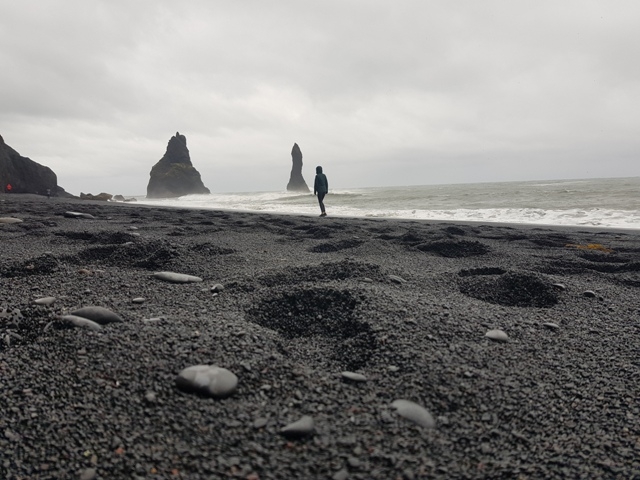
The famous black beach Reynisfjara is located near Vik, 180 km from the capital of Iceland. You can get there by car in just around two hours drive. It is definitely one of the most famous places in Iceland. Thousands of people come there to see the famous black beach, so different from all the beaches you can see in Europe. It really is one of the most magical places in Iceland.
In 1991, Reynisfjara was on the top ten of the most beautiful non-tropical beaches in the world – no wonder that it took part in some films such as Game of Thrones or Star Wars!
The beach is known not only for its exceptional beauty, but also for many accidents that careless tourists suffer. Strong winds prevent full relaxation and strong ocean waves keep you away from the shoreline. On this beach you will not have a bath or lie on a sun lounger, but you can still have a nice walk while admiring this stunning natural beauty in Iceland 😊
Submitted by Darek, Darek and Gosia
Another endorsement for Reynisfjara
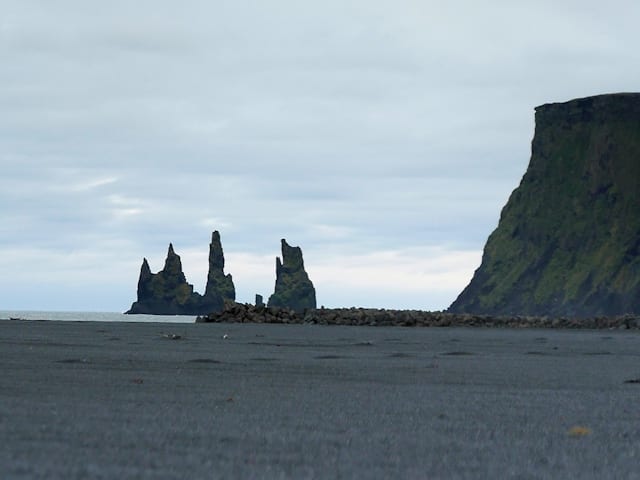
Iceland’s famous ‘black sand beach’ is found at Reynisfjara, near the small town of Vik, over 100 miles south east of the capital Reykjavik. It is a long drive to get to the black sand beach but the route is very scenic with several waterfalls and glaciers to visit before arriving at Reynisjafara. This area is the rainiest part of Iceland and the volcanic sand beach is an atmospheric and windswept place.
The sea is rough here and it is advised not to walk with your back to the waves in case ‘a sneaker wave’ hits the shore – a rogue wave with the potential to drag you back into the sea. The very fine, soft black sand adds to the dramatic feel of this landscape and is in contrast to the green landscape surrounding it. Reynisfjara is famous for its geometric, hexagonal columns of basalt rock lining the shore which are identical to the Giant’s Causeway in Northern Ireland. See the Reynisdrangar sea stacks and if it is safe to do so, explore the large basalt cave behind the stacks.
Submitted by Sinead, Map Made Memories
Fagrifoss
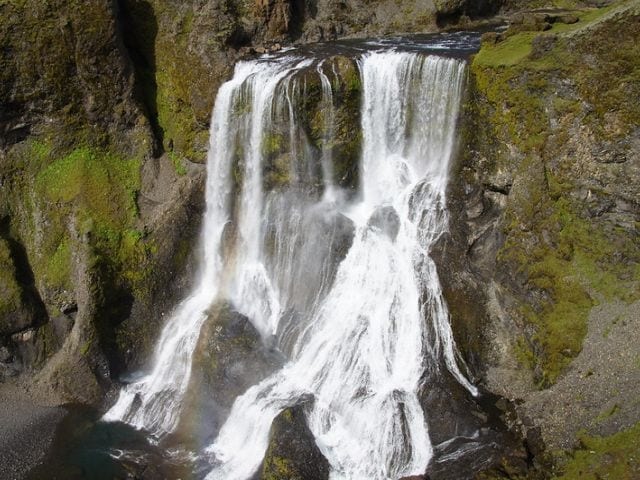
Waterfalls are a dime a dozen in Iceland, so what makes Fagrifoss special enough to include in your itinerary? Well, for starters, its name means “beautiful waterfall”, so that alone should tell you that it stands out among the rest. But what really sets this place apart is that it’s so hard to get to.
Why is that a good thing? Because it means that Fagrifoss is not overrun with tourists like so many other attractions in Iceland. In a country that’s really suffered from overtourism in recent years, it’s rare to find a waterfall that you can enjoy without anyone else around.
It may not be as big or powerful as world-famous falls like Victoria Falls in Africa or the Iguazu Waterfalls in South America, but the striking beauty of the water falling elegantly through a moss-covered gorge is something you won’t soon forget.
Getting here involves crossing a river, so don’t attempt this without a four-wheel drive. The falls are on the way to the Laki Craters, though, so be sure to make time to stop here if you’re passing in that direction.
Submitted by Wendy, The Nomadic Vegan
Puffin Watching on Westman Islands
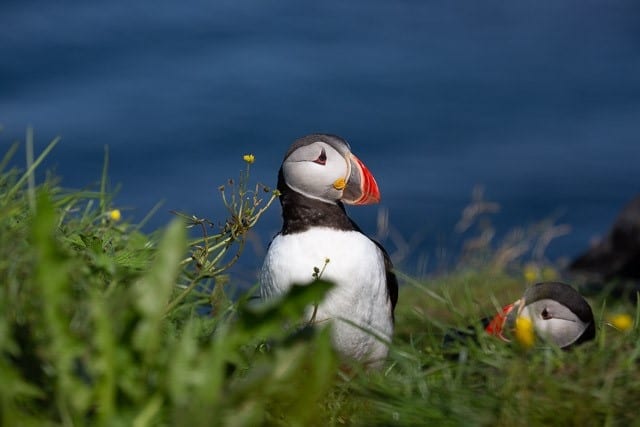
The Westman Islands are located in the south of Iceland just a short distance from the ring road and Seljalandsfoss. A ferry leaves from the harbour at Landeyjahöfn and takes you to the islands. You can take your car on the ferry or book a tour of the island which is designed to link in with the ferry times and travel as a foot passenger.
The main town is Heimaey and has a range of restaurants and hotels as well as a fantastic puffin rescue and beluga whale sanctuary. Behind the town is the dominant Eldfell volcano that erupted in 1973 and engulfed part of the town.
On the south side of the island is the puffin lookout that sits on one of the most exposed cliffs in Europe. This is where the puffins spend the summer. It is not difficult to find puffins here between April and late July. Give yourself time at this amazing location. The puffins will come and go continually. Watch their antics between each other as well as their landing styles. They really do earn their ‘clown’ title.
Submitted by Suzanne, Meandering Wild
Lóndrangar Cliffs
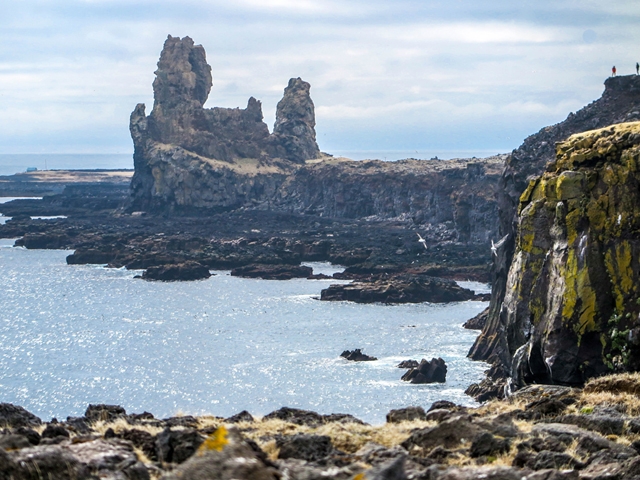
Lóndrangar belongs to one of the most unique natural sites of the Snæfellsnes Peninsula and the whole of Iceland.
The basalt cliffs stick out of the sea in pinnacle-like shapes. Icelanders call the taller pinnacle a church of elves, the hidden people. The shorter one is then their library. So as not to disturb the elves, local farmers have never made hay in the area.
The unique shapes emerged from an ancient volcano crater, which got gradually eroded by the sea.
The Lóndrangar cliffs are best observed from afar. The nearby Þúfubjarg Bird cliffs provide a perfect view of Lóndrangar. They are quite a sight of their own, with their nesting colonies of various types of birds. Apart from the omnipresent seagulls, you might be lucky and spot a puffin or two.
There’s a large parking lot near Lóndrangar and Þúfubjarg Bird cliffs, making it easy to make a stop there on your way around the Snæfellsnes Peninsula in the West of Iceland. You’ll find it near the town of Hellnar.
Submitted by Veronika, Travel Geekery
Strokkur Geysir

As possibly the best feature of Iceland’s Golden Circle, Strokkur Geysir is a true wonder of nature. This geothermal feature is part of the greater Geysir geothermal area in the Haukadalur valley of South-West Iceland. Strokkur is one of the world’s most active geysers. Surrounded by bubbling pools, and smaller inactive geysers, the whole area literally smolders. Steam billows from pools and streams.
Strokkur was formed as a result of an earthquake, some two centuries ago. You can practically set your watch to the explosions of Strokkur Geysir. Every eight minutes it sends a blast of spray some 20-40 metres into the sky. The spray seems to linger in the air, before drifting and saturating those unfortunate enough to stand downwind. Viewed from any angle (even downwind) it’s a marvel to behold.
The feature can be visited as part of the many Golden Circle tours which run from Reykjavik, or better still on a self-navigated road trip. Give yourself the time to watch the geyser perform a few times, then relax a while in the restaurant of the nearby Geysir Center.
Submitted by John, Carpe Diem Eire
Hornstrandir Nature Reserve

Hornstrandir Nature Reserve is a remote gem isolated in the northernmost part of Iceland’s Westfjords. No roads run through the reserve, only cairn-marked hiking trails, and the only way to access its incredible beauty is by boat. While some hamlets still exist along the reserve’s fjords, the region hasn’t seen extensive human influence, including development or grazing, for many years. This makes Hornstrandir a hotbed of rare native plants, extensive bird nesting colonies, and the best place to see arctic foxes in Iceland.
One of the few accommodations on the peninsula, Kviar Lodge, is the perfect place to relax after a day of hiking to nearby waterfalls, kayaking the remote fjord inlets, and keeping a watchful eye out for the variety of wildlife that call Hornstrandir home. While staying in the area for at least one night is ideal, day boats make the round-trip journey from Isafjordur throughout the week. Hornstrandir should be on anyone’s list hoping to get a taste of the truly wild part of Iceland that few have explored before!
Submitted by Christa, Expedition Wildlife
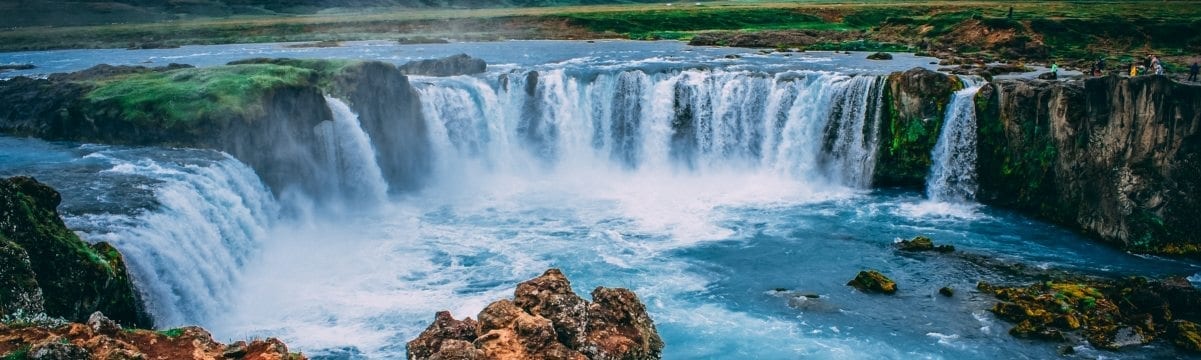
Gullfoss
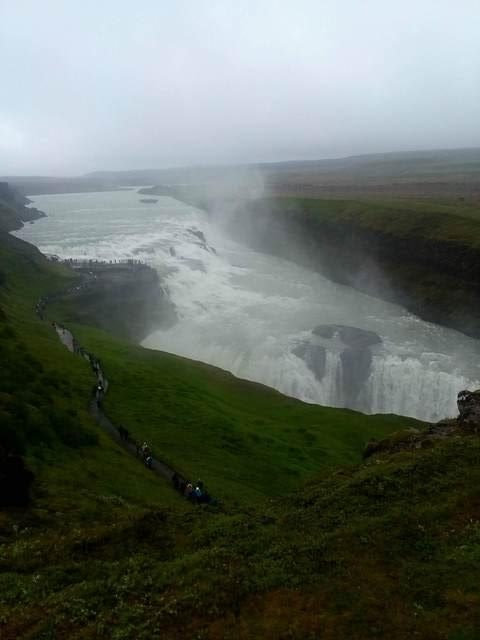
One of the most awe inspiring waterfalls in all of Iceland is Gullfoss. This two-tiered waterfall’s thunder fills its canyon gorge on the Hvita River, located in southwestern Iceland. This stunning feat of nature is conveniently located along the Golden Circle, a Icelandic road trip destination brimming with loads of natural landmarks!
The sheer size and volume of this fall is what takes visitors’ breath away. The two falls that form Gullfoss are 36 and 69 feet in height, and the width of the fall gorge is 66 feet wide. The precipice into which this fall flows is over one mile in length!
Gullfoss is accessible by a short path from the Visitor’s Center, and there are several different marked trails that lead to multiple viewing platforms, each with a distinctive perspective on the falls. One of the unique things about viewing Gullfoss is that from the different viewing platform angles, it appears the gigantic falls are disappearing straight into the earth!
Gullfoss is one of the top natural wonders to experience in Iceland, and is one of the country’s most beloved waterfalls. Its convenient location on the Golden Circle, easy accessibility, and jaw dropping views make this a highlight of any Iceland itinerary!
Submitted by Kristen, Yonderlust Ramblings
Blue Lagoon

As one of the 25 wonders of the world, the Blue Lagoon is a must-see while visiting Iceland. The Blue Lagoon is a geothermally heated spa located in a desolate lava field in Iceland’s southwest region. It is unlike anything else on earth and to experience the natural wonders and powers of the lagoon are otherworldly. This is a great first stop if you are visiting Iceland in April.
The land that forms the pools at the Blue Lagoon are completely natural and are shaped by the lava and the water is heated by the geothermal powerplant that uses Iceland’s volcanic landscape to create power.
Beyond being an amazing natural phenomenon, the lagoon is full of milky blue water that is beyond beautiful to look at. Plus, the water sits at 102°F year-round and is full of nourishment that is great for the skin! There are also swim-up bars in the water and facemasks for you to use and relax with. A day at the Blue Lagoon is not only a bucket list experience but also great for the mind and the soul to recharge and relax.
Submitted by Samantha, Sam Sees World