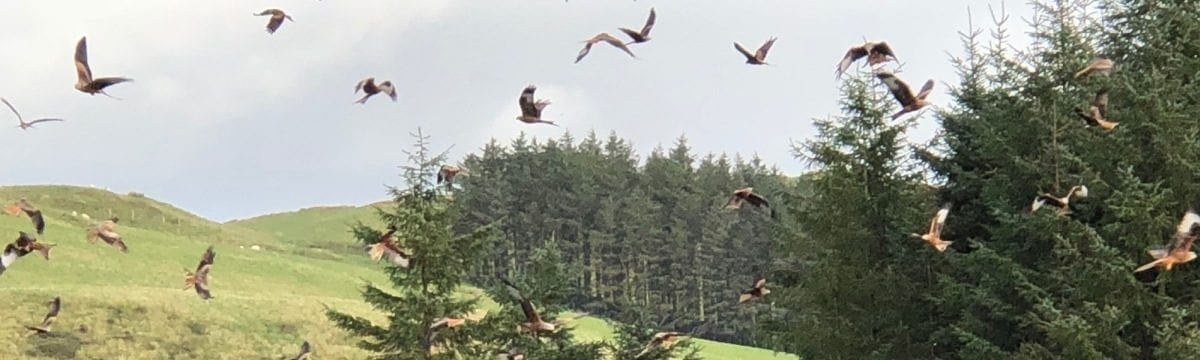
We moved to Aberystwyth in mid-west Wales in 2001. Two years before this, the Bwlch Nant Yr Arian Nature Reserve, just a few miles inland, became a red kite feeding station to protect the small numbers of red kites in the area at that time. We visited regularly, always around the birds’ feeding time. Whenever we head back to Wales, this is always top of the list of places to visit. Eighteen years on, you’d never believe these beautiful birds were once persecuted to the brink of extinction in the UK.
The Red Kite
Red kites (Milvus milvus) are an easy bird of prey to recognise in the UK. For a start, they are very big, with a wing span of around 185cm. It has a deeply forked tail, which makes it instantly recognisable.

Copyright: RSPB
Persecution
Back in Shakespeare’s day, red kites were common in London. In fact, the Bard mentioned them 15 times in his works; but never in a good way. They were considered scavengers and vermin and they were hunted and poisoned. The popularity of egg collecting took this bird of prey close to extinction in the UK, with Wales having the only remaining breeding pairs. However, these birds had a low chick rate, due to the continued theft of eggs by collectors, but also because of pesticides and poisoning. At one point in the 1980s the red kite was one of only three species globally threatened. It therefore became a conservation priority.
Chicks from Wales, Sweden, Germany and Spain were released in England and Scotland during the 1990s, with pairs breeding in the wild a few short years later. What happened over the following years has to be one the most successful conservation projects of modern times. In 2006 the first red kite in 150 years was seen flying in London, as reported in The Independent newspaper. Now, wherever you are in the UK there’s a fair chance of spotting one.
The Bwlch Nant Yr Arian Nature Reserve
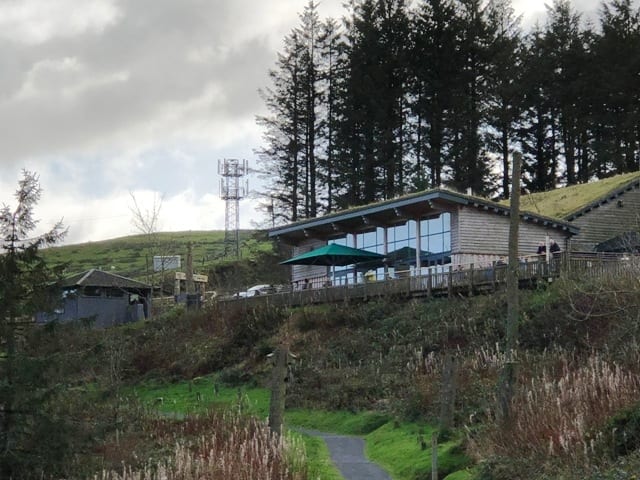
This beautiful nature reserve is located along the A44, 9 miles east of Aberystwyth. We tend to visit for a coffee and to watch the birds, but there is so much more to do here. Activities include:
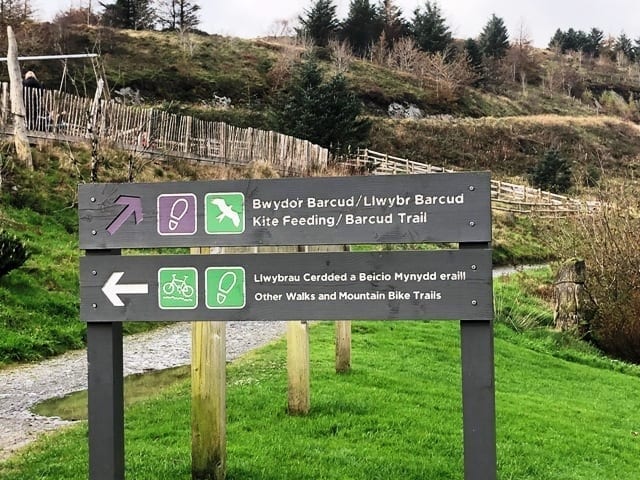
- Three marked walking trails (the Barcud Trail is wheelchair/pushchair friendly)
- Three mountain bike trails
- ‘Skills park’ where mountain bikers perfect their techniques
- Two running trails
- Four orienteering courses of varying difficulties
- A circular trail for horse riders along forest tracks, paths and lightly-used roads.
There’s two play areas – one for toddlers, and one for the ‘over 6’ age group. This nature reserve is very child-friendly, with lots of educational ‘treasure hunt’ games to focus the children while walking the lake etc.
The café is lovely too! My favourite ever visit was one lovely spring day. It was mid-week and the weather was beautiful. We were the only visitors and we sat outside drinking coffee near to where lots of well-stocked bird feeders were located. (This area is also, incidentally, perfectly located above the lake – incredible views.) The number of chaffinch, greenfinch, siskins, blue tits and coal tits visiting was incredible. I could have watched them all day!
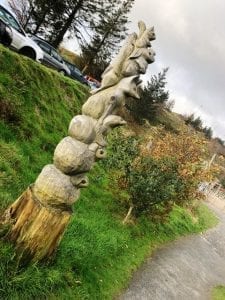
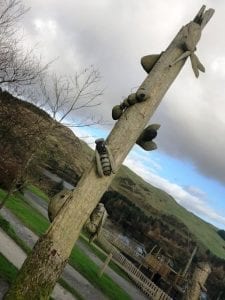
Parking costs £1.50 for up to 2 hours, or £3 for over 2 hours. It is also a very accessible nature reserve: there’s disabled parking, wheelchair access to the visitor centre and café, disabled toilets, and the circular trail around the lake is mainly flat on wide paths.
Red Kite Feeding
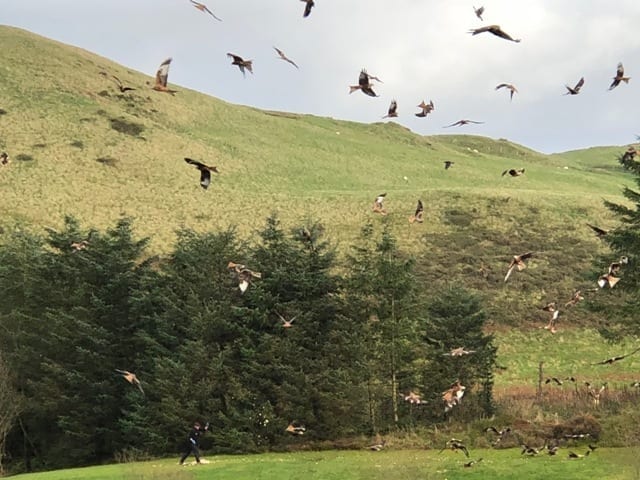
This nature reserve, however, is most famous for the daily feeding of the red kites. During the winter months this takes place at 2pm, in the summer is it 3pm. A warden walks a bucket of food around the lake to the hide on the reverse side. Even before he starts his walk, the red kites start to circle. It’s impossible to count how many birds turn up once the food is distributed – hundreds … it is quite the spectacle. Every time I visit I always promise myself that I’ll have good photographic equipment next time … it’s impossible to get a good photo with a phone! So, on our recent visit, I took this short video instead …
The red kite is now considered the National Bird of Wales, and rightly so. They are magnificent, as well as huge! I love seeing them in great numbers at feeding time at the Bwlch Nant Yr Arian Nature Reserve. You can easily spend a few hours here. If you visit, don’t forget your binoculars!
For more information, please visit the Visit Wales website here